#02 Ascolta Acousmatic Listening Session
Audience: Composer, Student, Researcher, Studio visitor.
Concert
Tuesday, October 4, 2022, 18:00
- Toni-Areal,
- ICST-Kompositionsstudio (3.D02, Ebene 3)
- Pfingstweidstrasse 96,
- 8005 Zürich
Free admission
Programm
Vêpres vénitiennes – Il dì s’appressa (1999) Rainstick (1993) Im Eismeer – ein Schumann-Stück für Tonband (1997) Auf schwanker Halme Bogen (1985) Un Madrigal gentile (2004)
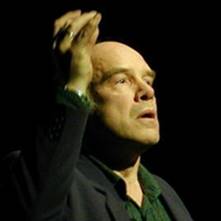
Gerald Bennett, born 1942 in New Jersey (USA), studied among others at Harvard University with Robert Moevs and in Basel with Klaus Huber and Pierre Boulez. 1967–76 he was lecturer for music theory at the Basler Konservatorium, from 1969 its director. 1976–1981 he headed the Département Diagonal at the Paris Institut de Recherche et Coordination Acoustique/Musique (IRCAM), and from 1993 he was member of the Internationalen Akademie für elektroakustische Musik Bourges. From 1981 until his retirement, Gerald Bennett taught music theory and composition at the Hochschule für Musik Zürich. Together with Bruno Spoerri, Antonio Greco, and Rainer Boesch, he founded the Schweizerische Zentrum für Computermusik(SZCM) in 1985, and together with Daniel Fueter the ICST – Institute for Computer Music and Sound Technology in 2005.
The works of Gerald Bennett comprise orchestral, chamber, and vocal works in various instrumentations with and without electronics as well as numerous electroacoustic pieces. His compositions are published by Edition Modern/Ricordi and Mnémosyne, recordings of his works appeared with Wergo, Jecklin, and Harmonia Mundi. He is the author of numerous publications, which have appeared with Gallimard, Oxford University Press, Eulenburg, MIT Press, and others. Gerald Bennett
Current information about the event can be found here.
Program notes:
Gerald Bennett: Vêpres vénitiennes - Il dì s’appressa (1999)
“Il dì s’appressa” is part of a larger work (of course still unfinished): the “Venetian Vespers”. The Venetian Vespers at San Marco were distinguished from the Roman Vespers by the richness of their music. This work takes the place of the ancient marian sung towards the end of the vespers. It is based on the first two lines of the last poem of Petrarch’s “Canzoniere”, a poem about death addressed to the Virgin: Il dì s’appresa e non puot’ esser lunge, Sì corr’ il temp e vola … “Il dì s’appressa” was commissioned by the International Institute of Electroa- coustic Music in Bourges, France, and realized in its studios in 1999.
Gerald Bennett: Rainstick (1993)
The rainstick is a ritual instrument of the Indians of Central and South America used to conjure rain. In this piece, the rainstick is used to conjure many different things, both real and imaginary (but not rain). One of the piece’s principal ideas is the pas- sage from continuity to discontinuity. Of course, this movement can reflect and ex- press both a structural and an emotional trajectory. “Rainstick” was commissioned by the Groupe de Musique Expérimentale de Bourges and was realized in their studios in 1993.
Im Eismeer – ein Schumann-Stück für Tonband (1997)
Auf schwanker Halme Bogen (1985)
Gerald BENNETT : Un Madrigal gentile (for tape alone)
“Un Madrigal gentile” is meant to be a piece of Commedia dell’ arte. It was inspired by the madrigal comedy “Amfiparnaso” by Orazio Vecchi (1594) and begins where the «Amfiparnaso»’s narrator announces the Doctor’s singing of a parody of the most famous madrigal of the 16th century, “Achor che col partire” by Cipriano da Rore. My piece, too, is a parody of the same madrigal, which can be heard again and again all the length of the piece. Cipriano’s madrigal engenders many musical figures in my piece; each one is treated as a character from an imaginary Commedia dell’arte, exaggerated, made clownlike, clumsy or gratuitously brutal. The sentimental lovers or the madrigal accompany the piece from their impossible world, and frequently cheerful chaos reigns. «Un Madrigal gentile» was commissioned by the French Ministry of Culture, realized at the IMEB in 2004/2005 and is dedicated to Françoise Barrière and Christian Clozier in grateful friendship.
The following texts will be heard:
Canta il Dottore un madrigal gentile sotto’l balcon de la sua cara sposa con voce soavissima e amorosa.
The doctor sings a gracious madrigal under the balcony of his dear betrothed in the sweetest loving voice.
(Enfants au Grand Guignol) Attention! Attention! (Children watching Punch and Judy) Be careful! Be careful!
. . . tanto son dolci . . . . . . how sweet are . . .
In the prologue of the «Amfiparnaso», the narrator tells us:
E la città dove si rappresenta quest’opra è’l gran Teatro del mondo, perch’ognun desìa d’urdirla. Ma voi sappiat’intanto che questo di cui parlo spettacolo si mira con la mente, dov’entra per l’orrecchie, e non per gl’occhi. Però silenzio fatte, e’n vece di vedere hora ascoltate.
And the City where this piece plays is the great Theater of the World, which everyone wishes to hear. But nevertheless you should know that the drama of which I speak is seen only in the mind, into which it enters through the ears and not the eyes. Silence, then, and rather than watching, now listen.