Blauert's Bands
Institute for Computer Music and Sound Technology / (ICST) Zurich University of the Arts
Blauert’s Bands
What this tutorial covers
How to use Blauert's Bands (frequency-dependent directional perception) to enhance front/back and height perception in Ambisonics — by coupling the ICST Encoder's Y and Z axes to the IEM MultiEQ via OSC.
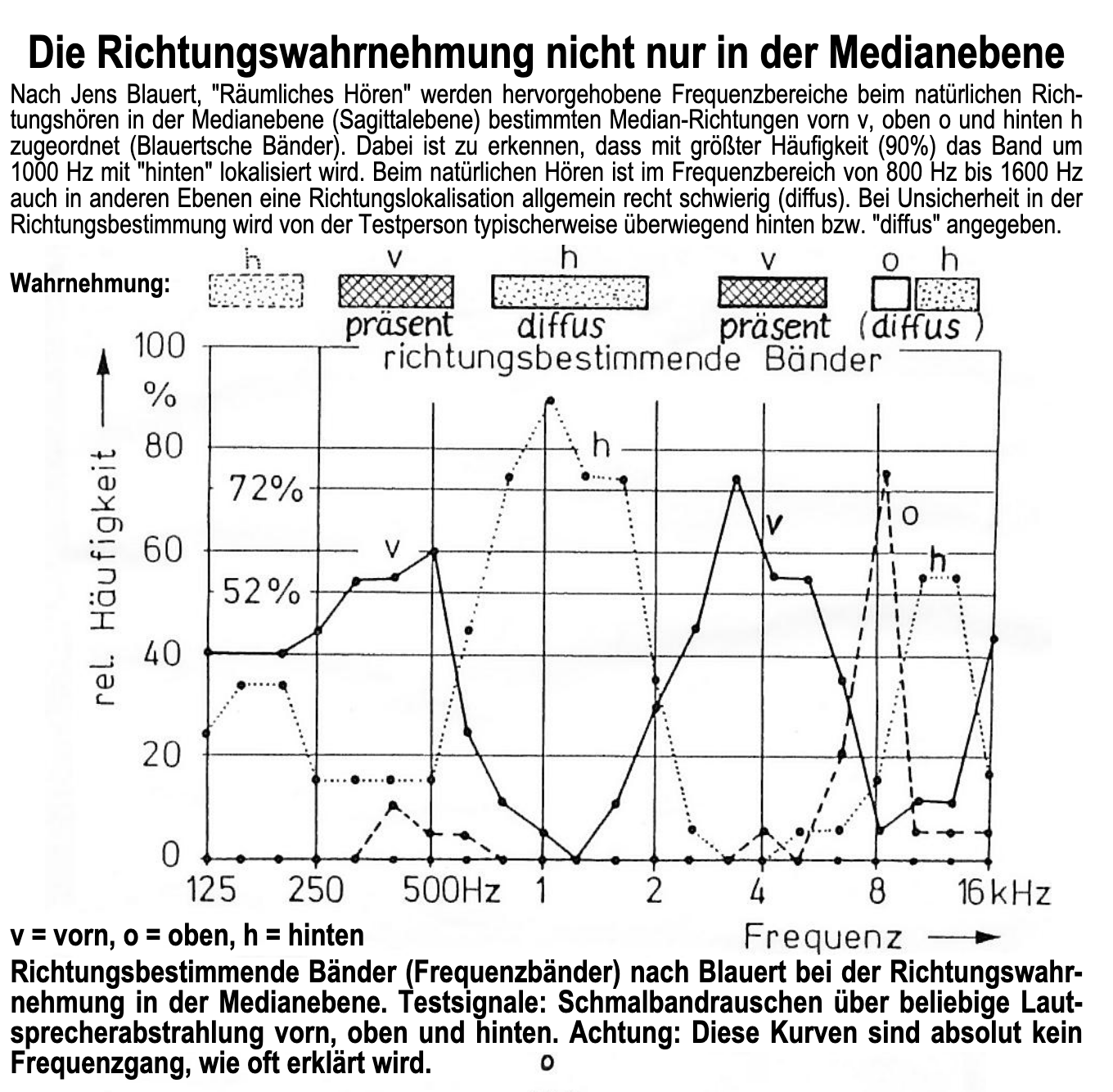
For the voice and its directivity perception I conducted experiments with the Blauert’s Bands.
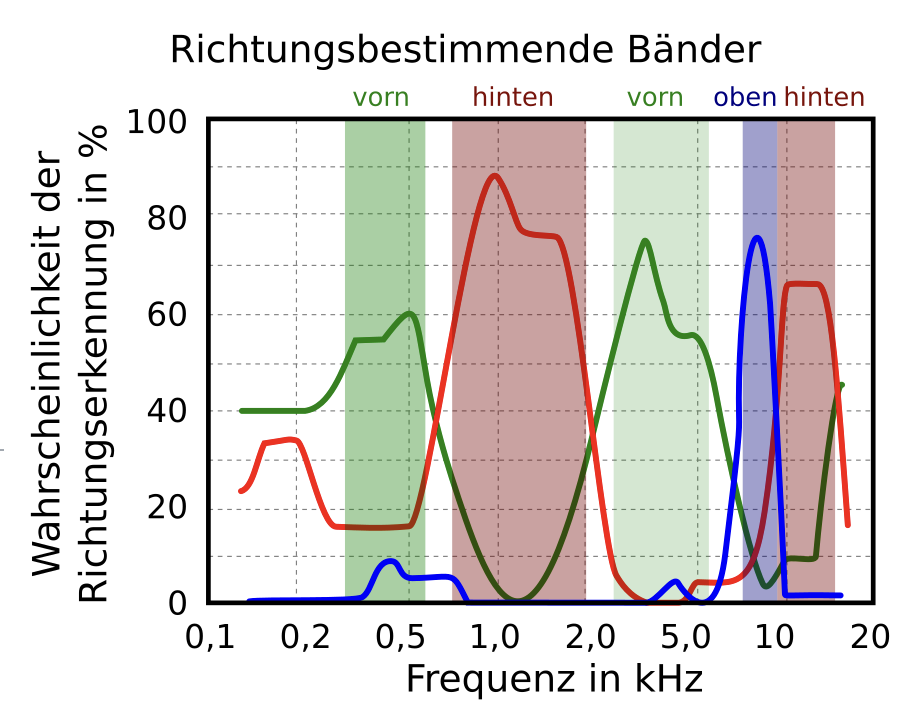
Thus I coupled Y Front ↔ Back and Z Top ↔ Bottom with the IEM-Multifilter.
OSC Routing
Height (Z-Axis → IEM MultiEQ)
OSC OUT · Port 8008
ICST Encoder OSC-Out Height → /MultiEQ/filterGain4 {sz, -5.3, 0.0, 5.3}OSC IN · Port 8008
Z → IEM MultiEQ: /MultiEQ/filterGain4 (Float)Front/Back (Y-Axis → IEM MultiEQ)
OSC OUT · Port 8008
ICST Encoder OSC-Out Front → /MultiEQ/filterGain4 {sz, -5.3, 0.0, 5.3}
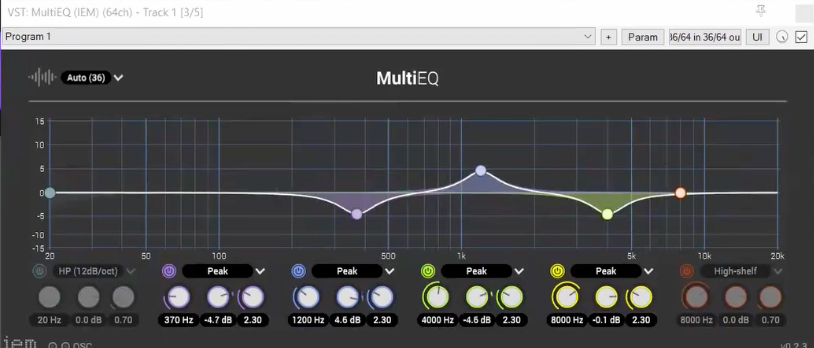
IEM MultiEQ — Frequency Bands
Height (8 kHz boost)
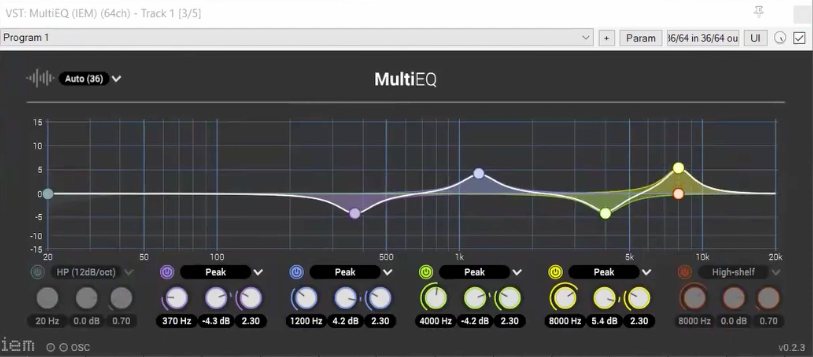
Front
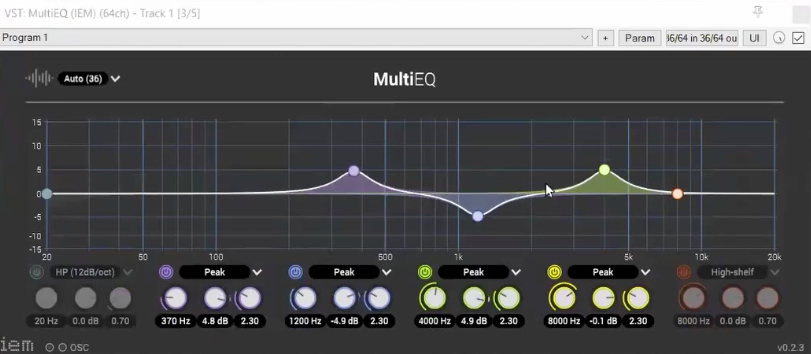
Back
Workflow Steps
1
How can I make the presence of the front/back and the feeling of highs and lows more audible?
2
Create OSC communication between Encoder (Y, Z axes) and IEM MultiEQ (Blauert's Bands).
3
Set up a Mono-Encoder FX-Chain "Blauert's Bands-Ambi".